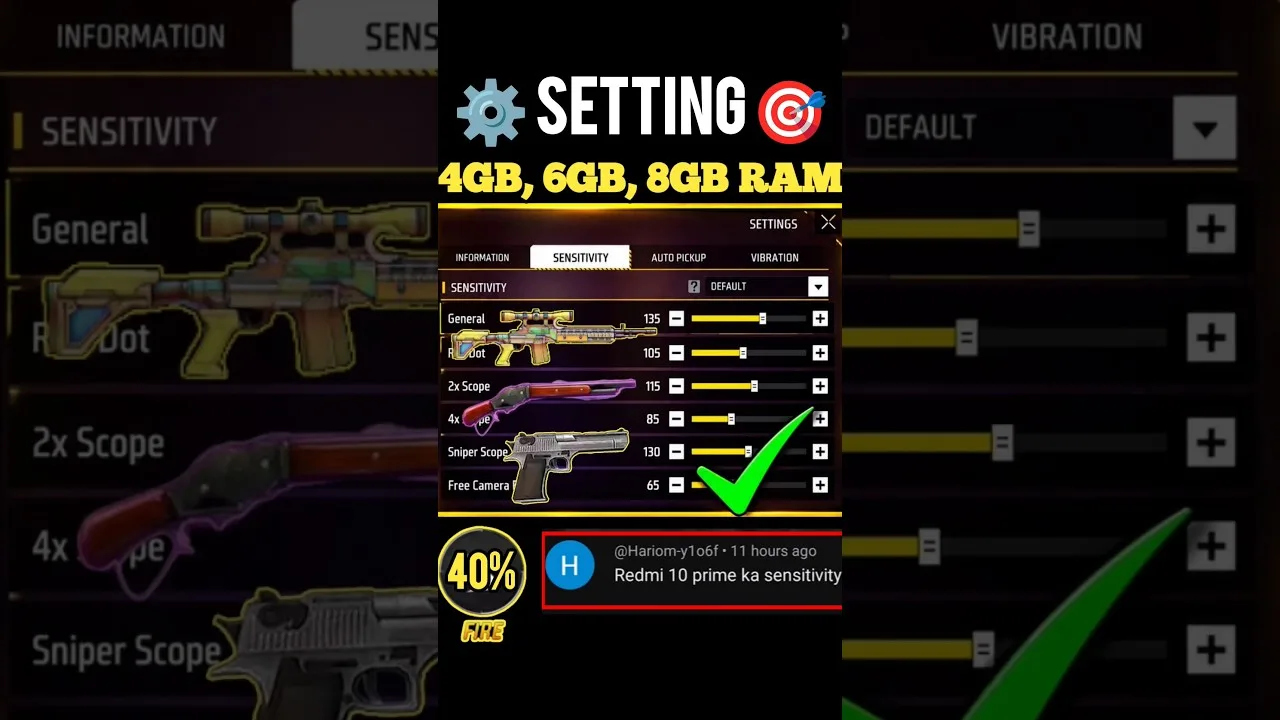
Six controls present themselves as sextuplets and behave as specialists. Each owns a distinct moment of a fight, and adjusting the wrong one for a given symptom is the seed from which most failed tuning grows. This reference walks the X3 Panel sliders one by one — their jurisdiction, their feel, and the complaint that accuses each when aim goes wrong.
Keep it open beside the app during your next session. It is a bench document and expects to be used as one.
General: The Foundation
General sensitivity commands camera and crosshair outside scoped aim — hip-fire, turning, close-range tracking, the raw substance of every drag. Being the most-experienced value in the app, it is tuned first and altered most reluctantly.
Its signature complaints: wading against strafing opponents at touching distance, or a crosshair too nervous to hold a doorway steady. Either conversation is with general, whatever the scopes have been telling you.
Red Dot: The Decider
Red dot sensitivity governs the sight picture in which most deliberate close and mid-range work is done, drag headshots emphatically included. It is tuned second, immediately on general's foundation, at distances sampled from your real fights.
The diagnostic contrast is crisp: hip drags behave, sighted drags overshoot — red dot stands accused alone, and general is to be left strictly untouched. Our headshot settings guide is the extended brief on this working pair.
2x and 4x: The Descending Ladder
Mid-range motion belongs to the 2x; considered work at distance to the 4x. Magnification multiplies apparent movement, so the ladder must descend as zoom ascends — identical swipes should soothe the crosshair progressively as the world draws nearer.
Anchor both relative to red dot, then examine each by its honest test: tracking for the 2x, placement for the 4x. The scopes' full hearing, sniper discipline included, is our scope settings guide.
Sniper Scope and Free Look
Sniper scope sensitivity administers the summit magnifications, where the labour is one micro-correction preceding one committed shot; it holds the family's lowest value and wears its reluctance proudly. Free look, the nonconformist, steers only the look-around camera — it fires nothing, and is set by comfort without apology.
Neglecting free look levies a quiet tax on survival: fluid, frequent flank-checking is a life-preserving habit, and this unassuming slider is its entire department.
The Diagnostic Habit
Aim complaints arrive addressed: hip-fire disorder to general, sight overshoot to red dot, an orbiting crosshair to that scope's value, ponderous turning to general once more. Read the address before delivering the adjustment and half of tuning's mystery evaporates.
One accused control, one measured change, one written outcome. Within a week the sextuplets resolve into labelled instruments, and tuning becomes the engineering it advertises itself as.
Final Thoughts
Foundation, decider, descending ladder, quiet guardian. Learn which moment each slider owns and the sensitivity screen transforms from riddle into instrument panel — the single most useful transformation in your entire setup.